Updated: March 16, 2026
Across Brazil’s interior landscapes, the city Outdoor Activities Brazil label is becoming a practical vocabulary for planners, campers, and travelers alike. As officials roll out water security upgrades and expand public access to forested corridors, outdoor life is no longer a niche pastime but a lens for regional resilience and community identity. This analysis examines how those shifts shape camping behavior, gear choices, and local economies, and what they portend for a country where nature is both playground and resource.
Context: Water Security and the Rise of Outdoor Life
Water security acts as both a baseline and a driver. When a city commits to reliable supply and inclusive sanitation, authorities can authorize more campsites, trails, and riverbank access for public use. In regions where water treatment reaches near universal levels, rivers and streams become legitimate arteries for recreation rather than contested resources. A Brazilian interior city highlighted in development reports has been described as achieving universal treated water and a high development ranking, which, in practice, has lowered perceived risk for families and tour operators seeking weekend escapes. This backdrop matters because campground viability, trail maintenance, and waste management hinge on dependable water services, public health oversight, and predictable seasons. The result is a more predictable outdoor calendar that helps communities plan multi-day trips, local guide networks, and gear hubs around major transport links.
Climate realities also shape this context. In many interior municipalities, the seasonal patterns of rainfall, drought risk, and flood potential influence when and where people camp. When infrastructure mitigates water scarcity during dry months and stores flood risks during wet ones, outdoor programs can stretch from the high season into the shoulder periods, supporting local economies and reducing pressure on crowded urban venues.
Economic Shifts and the Camping Economy
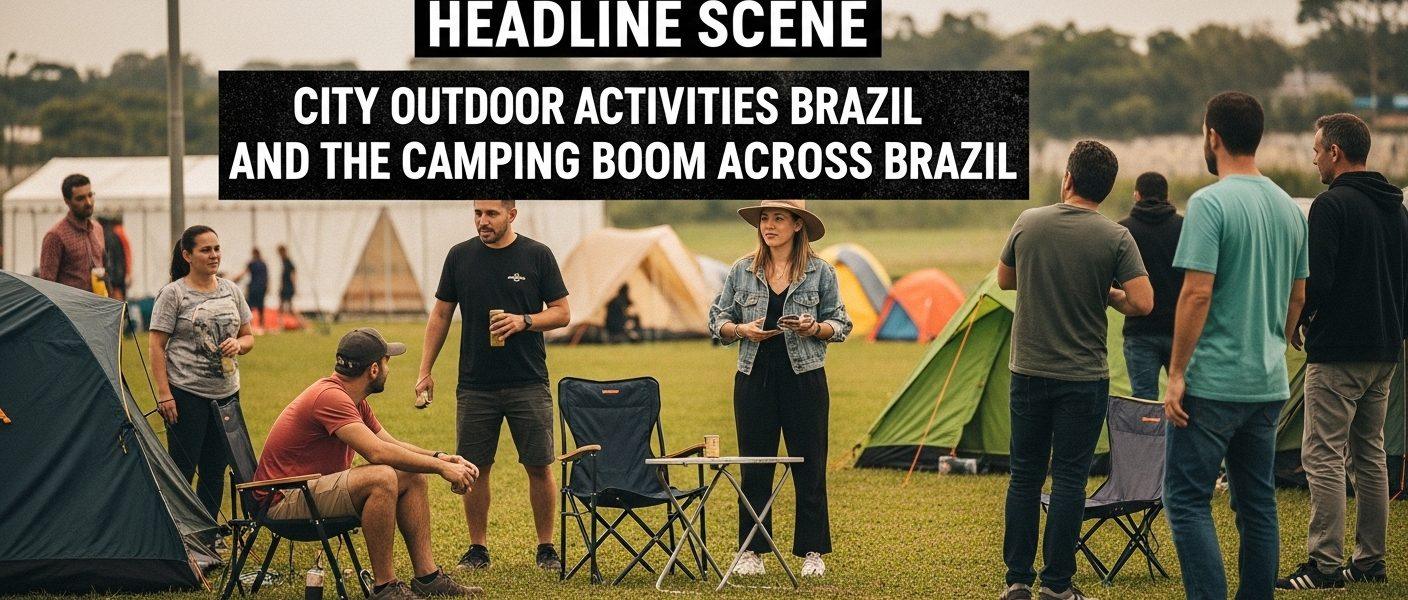
As water security and corridor planning expand access to natural areas, a new camping economy emerges at the municipal level. Small businesses—campground hosts, gear rental shops, guides, and regional hospitality—benefit from steadier demand and clearer safety standards. The interior approach often emphasizes family-oriented, family-safe experiences: accessible trails, safe river crossings, well-marked campsites, and simple waste-removal systems. This is not merely about selling tents; it is about building credible itineraries that combine day hikes, fishing or paddling, and short overnight stays. In this frame, the city Outdoor Activities Brazil becomes a signal that the market expects reliable outdoor experience, while residents discover new livelihoods tied to nature-based tourism. The economics also interact with urban planning: employers recruit staff who understand mobile payment systems, environmental education, and visitor services, creating a more diversified local economy beyond agriculture alone.
Gear trends reflect this maturation. Lightweight shelters, compact cooking kits, and safety gear compatible with family trips become common in local shops. At the same time, community programs—climbing walls in public squares, supervised canyon trips, and sanctioned night walks—help disseminate best practices and foster a culture of responsible recreation. The result is a feedback loop: better infrastructure reduces risk, which in turn expands participation, which then broadens revenue streams for service providers and strengthens maintenance funding for public spaces.
Designing Trails, Campsites, and Public Spaces
Effective planning hinges on inclusive design and ongoing community engagement. Trails should be oriented to minimize environmental impact while maximizing accessibility for seniors, children, and people with mobility challenges. Campsite design matters too: enough spacing between sites, sheltered latrines, and clear water points minimize contamination risks and improve user experience. Signage, trail maps, and multilingual information empower visitors to plan responsibly, while enforcement of Leave No Trace principles helps preserve resources. Local authorities increasingly debate whether to centralize some services—such as waste management and safety patrols—or decentralize them to neighborhood associations and ecotourism cooperatives. The balance matters because it shapes accountability and the speed with which repairs or emergency responses can be mobilized during peak seasons.
Public spaces such as riverbanks, parks, and forest edges increasingly function as multi-use modules—recreational areas that double as educational sites for biodiversity and water stewardship. The most durable models pair formal governance with community stewardship, encouraging citizen science, clean-up drives, and volunteer trail maintenance. In this ecosystem, the city Outdoor Activities Brazil becomes a case study in aligning municipal ambition with local capacity, ensuring that growth in outdoor recreation does not outpace the communities that sustain it.
Future Scenarios: Climate, Policy, and Cultural Change
Looking ahead, several scenarios compete for influence. A climate- and policy-led trajectory could expand protected corridors, investing in climate-resilient infrastructure, and formalizing cross-jurisdictional trail networks that link towns across rivers and valleys. In that world, Brazil’s interior towns become hubs of sustainable travel, with documented visitor numbers, standardized safety protocols, and robust toilets and water stations along popular loops. Alternatively, mismatches between demand and supply—such as inadequate staffing, uneven enforcement of environmental rules, or outdated waste management—could dampen participation, especially among first-time campers who require clearer guidance and more visible safety cues. A third possibility emphasizes cultural change: growing interest in local food systems, indigenous knowledge, and low-impact practices that reframe camping as a relationship with place rather than a consumptive activity. In all futures, the central organizing question remains: how well can cities translate water security, transportation access, and public space design into durable outdoor life for residents and visitors alike?
Actionable Takeaways
- Invest in watershed protection and municipal water treatment to support camping logistics.
- Map and maintain multi-use trails linking towns to natural areas.
- Support small businesses and clubs that organize responsible camping and Leave No Trace practices.
- Develop scalable, low-cost emergency shelters and information centers in interior cities.
- Encourage data-driven planning with citizen input for outdoor infrastructure.
- Promote inclusive design that serves families and visitors of all abilities.